Hiking Switzerland: The Ultimate Guide to Trails, Views and Alpine Adventure

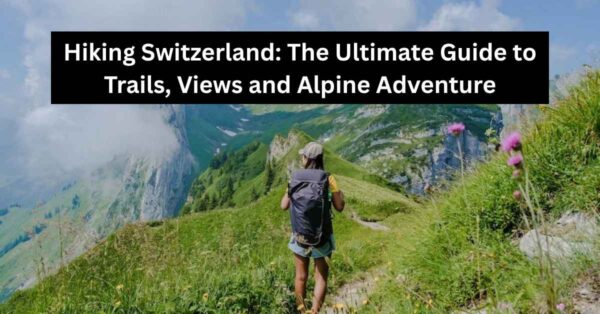
Few experiences compare to hiking Switzerland where emerald valleys stretch below snow dusted peaks, glacial lakes reflect the sky, and every trail feels like a postcard brought to life. The Swiss Alps aren’t just famous for skiing and chocolate; they’re also home to one of the world’s most extensive and well maintained hiking trail networks, covering more than 65,000 kilometers of pure outdoor magic.
Whether you’re a beginner craving easy valley walks or a seasoned trekker aiming for high altitude challenges like Zermatt’s Matterhorn trails, Switzerland offers something for every fitness level, age, and season.
In this ultimate guide to hiking Switzerland, we’ll cover the best trails, essential gear, safety tips, apps, and hidden gems to help you plan the perfect Alpine hiking adventure.
Why Switzerland is a Hiker’s Paradise
Switzerland’s beauty lies in its variety. You can walk past wildflowers in the Jura Mountains, cross bridges over turquoise rivers in Interlaken, or gaze up at glaciers from Zermatt all within a few hours’ train ride.
Here’s what makes hiking in Switzerland truly special:
1. World Class Trail System
The Swiss hiking network connects every corner of the country from lakes to peaks with clearly marked yellow signposts that show distances, estimated times, and altitude changes.
- Yellow signs = Easy walking trails
- White-red-white markers = Mountain trails (moderate)
- White-blue-white markers = Alpine trails (challenging, require experience)
2. Seamless Public Transport
You can access nearly any trailhead by train, Postauto bus, or cable car, thanks to SBB and SchweizMobil making car free hiking not only possible but preferred.
3. Diversity of Scenery
From lakeside strolls in Lauterbrunnen Valley to glacier treks near Matterhorn, each region offers a unique hiking flavor.
4. Safety & Maintenance
Swiss trails are exceptionally safe, with rescue services (REGA) and well-marked routes maintained by local communities and national parks.
Top Hiking Regions in Switzerland
Let’s explore the most breathtaking hiking areas each with its own personality, trail types, and scenic rewards.
1. Zermatt & the Matterhorn Region
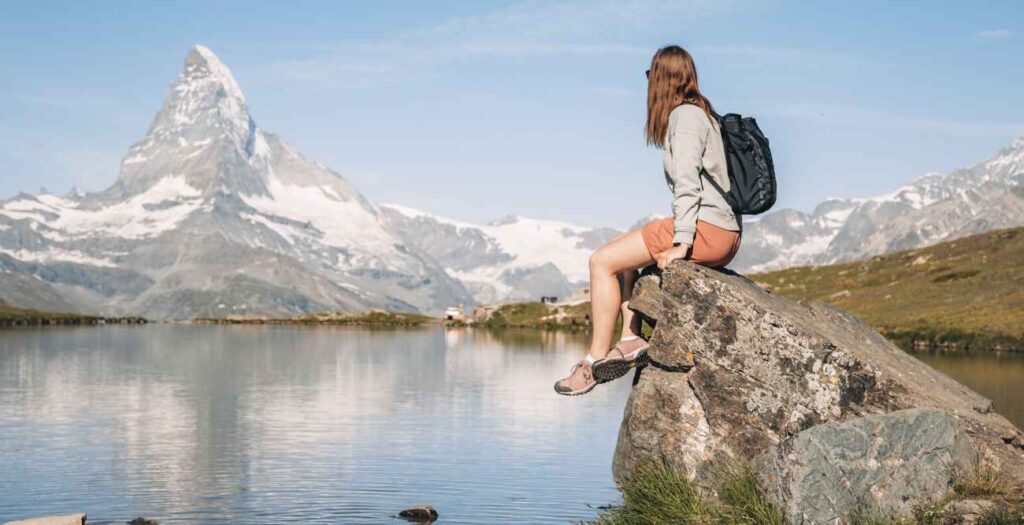
If there’s one place that captures the essence of Swiss hiking, it’s Zermatt a car free Alpine village nestled under the majestic Matterhorn.
Top Trails in Zermatt:
- Five Lakes Trail (5-Seenweg): Gentle 6 km loop showcasing five crystal lakes that mirror the Matterhorn.
- Hornlihütte Trail: A challenging ascent to the Matterhorn basecamp with dramatic views.
- Gornergrat Trail: Reachable by the Gornergrat Cogwheel Train, offering glacier and lake panoramas.
- Matterhorn Glacier Trail: High-altitude path with ice formations and glacier viewpoints.
Best Time: June – September
Tip: Stay overnight in Riffelalp or take the Gornergrat Bahn early morning for fewer crowds.
2. Interlaken & the Jungfrau Region
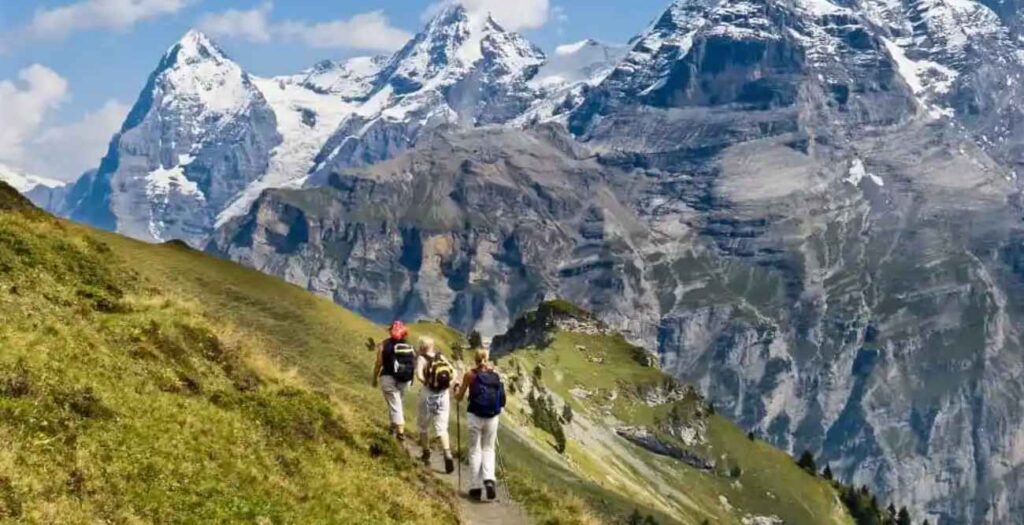
Known as the adventure capital of Switzerland, Interlaken sits between Lake Thun and Lake Brienz, surrounded by towering peaks Eiger, Mönch, and Jungfrau.
Popular Hikes:
- Hardergrat Trail: Legendary ridge hike offering 360° views of the lakes and Alps.
- Lauterbrunnen Valley Trail: Walk beneath 72 waterfalls and alpine villages.
- Mürren to Gimmelwald: Peaceful downhill hike through meadows and chalets.
Best For: Beginners, photographers, and families
Tip: Use the Jungfrau Travel Pass for unlimited cable car and train access.
Also Read: Swiss Mountain Railways
3. Grindelwald & First Mountain
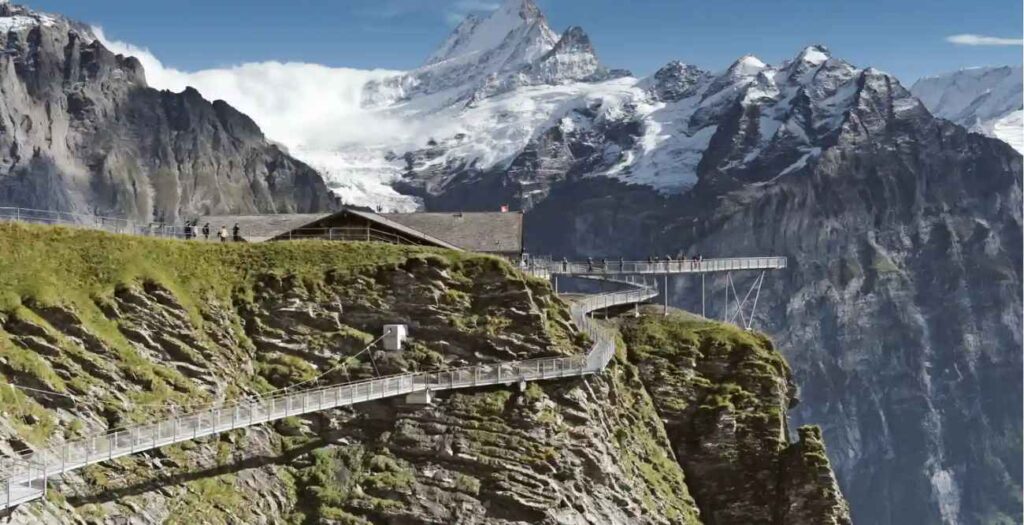
Grindelwald is a paradise for both summer and winter hikers. The First Cliff Walk by Tissot offers jaw dropping photo ops and thrilling suspension bridges.
Don’t Miss:
- Bachalpsee Lake Trail: Easy to moderate, ending at a perfect mirror lake view of Schreckhorn.
- Eiger Trail: A steep but rewarding trek under the north face of the Eiger.
Best Time: Late May – Early October
Gear Tip: Trekking poles help with steep descents here.
4. Engadin & St. Moritz
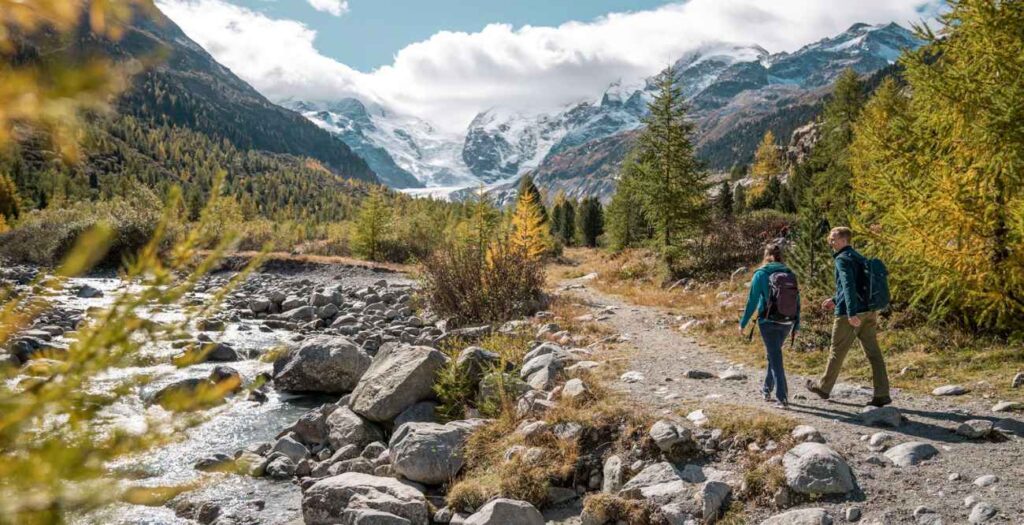
For luxury hikers or solitude seekers, Engadin Valley delivers stunning glacial lakes, ancient pine forests, and sunlit trails.
Top Hikes:
- Muottas Muragl Panorama Trail
- Val Roseg Glacier Hike
- Lai da Rims Alpine Loop
Best Time: June – October
Tip: Base yourself in Pontresina for easy access to multiple trails and mountain huts.
5. Ticino – The Italian Side of Switzerland
If you love Mediterranean vibes, Ticino combines Alpine peaks and palm trees.
Top Trails:
- Monte Tamaro to Monte Lema Ridge Trail
- Verzasca Valley Bridge Walk (Ponte dei Salti)
- Lugano’s Olive Trail
Best Time: April – October
Weather Note: Warmer and sunnier than the Alps pack light!

6. Appenzell & Eastern Switzerland
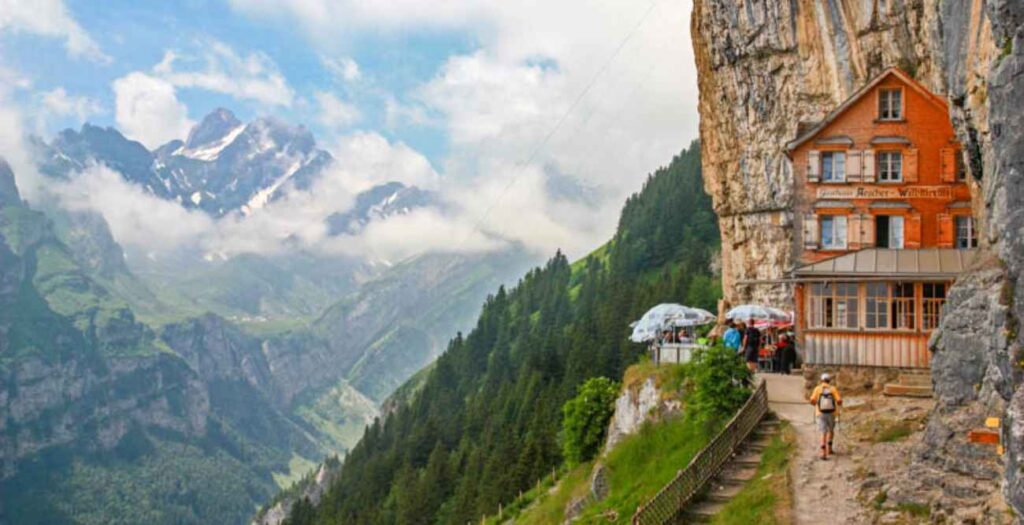
A lesser known gem, Appenzell features rolling meadows, cheese farms, and dramatic cliffs.
Top Trails:
- Seealpsee Lake Hike
- Ebenalp to Äscher Cliff Trail (famous for the cliff restaurant)
- Hoher Kasten Circular Route
Best For: Short scenic hikes + cultural immersion
What to Pack for Hiking in Switzerland
Switzerland’s weather changes fast one moment sunny, next foggy or rainy. Here’s a practical hiking checklist for all conditions:
| Essentials | Safety Gear | Optional but Useful |
|---|---|---|
| Hiking boots or trail shoes | Map & compass | Trekking poles |
| Breathable layers | First-aid kit | Power bank |
| Waterproof jacket | Whistle & flashlight | Camera |
| Hat & sunglasses | REGA insurance card | Snacks & Swiss chocolate |
| Refillable water bottle | Emergency blanket | Binoculars |
Pro Tip: You can rent hiking poles or crampons in most Alpine villages like Zermatt or Grindelwald.
Best Hiking Apps and Websites for Switzerland
- SchweizMobil – Official platform with GPS trails and public transport links.
- Wandern.ch – Swiss Hiking Federation’s detailed map of all routes.
- MySwitzerland – Tourism portal with suggested itineraries.
- Komoot / AllTrails – Best for GPS navigation and user reviews.
- SBB App – For train/bus connections between trailheads.
Use offline maps in remote valleys (signal can drop fast).
Best Time to Go Hiking in Switzerland
| Season | Conditions | Recommended Regions |
|---|---|---|
| Spring (April–May) | Melting snow, flowers bloom | Ticino, Lower Alps |
| Summer (June–August) | Warm, full trail access | Zermatt, Interlaken, Grindelwald |
| Autumn (Sept–Oct) | Colorful foliage, fewer tourists | Engadin, Appenzell |
| Winter (Nov–March) | Snow hikes, winter trails | Jungfrau, Davos, Arosa |
Tip: Always check Switzerland Weather Service updates before you hike conditions can change quickly at altitude.
Hiking Tips & Safety Guidelines
- Plan Your Route: Use SchweizMobil or Wandern.ch for reliable maps.
- Check Weather: Avoid thunderstorms and heavy fog at altitude.
- Respect Nature: Stay on marked trails; don’t pick alpine flowers.
- Start Early: Many trails close before sunset for safety.
- Emergency Help: Dial 1414 for REGA (Swiss Air Rescue).
“In Switzerland, safety and scenery go hand in hand. Every signpost, map, and mountain hut exists to keep hikers happy and alive.”
Cultural & Local Hiking Etiquette
- Greet hikers with a friendly “Grüezi!” or “Bonjour!”
- Close farm gates behind you.
- Don’t approach cows with calves they’re protective.
- Keep dogs on leash near livestock.
Hidden Gems: Underrated Hikes You Shouldn’t Miss
To stand out from crowded routes like Gornergrat or Eiger Trail, try these lesser known but equally stunning spots:
- Zmutt Valley Trail (Zermatt) – Quiet glacial valley walk.
- Edelweiss Trail (Lauterbrunnen) – Alpine flowers everywhere.
- Täschalp Circular Route – Gorgeous meadows and Matterhorn views.
- Creux du Van (Jura Mountains) – Switzerland’s natural amphitheater.
- Ruinaulta (Swiss Grand Canyon) – Breathtaking gorge in Graubünden.
More Read: Switzerland Lake
Hiking on a Budget in Switzerland
Switzerland isn’t cheap, but hiking can be!
Budget Tips:
- Bring your own snacks; restaurant stops can cost CHF 20+.
- Use Swiss Travel Pass for unlimited train & bus rides.
- Stay in youth hostels, mountain huts, or Airbnb chalets.
- Cook simple meals using Migros or Coop supermarket groceries.
Bonus: Public fountains provide free, drinkable water almost everywhere!
Sustainable Hiking in Switzerland
Switzerland promotes eco friendly tourism, and hikers play a role too:
- Take only photos, leave only footprints.
- Use refillable bottles and avoid plastic waste.
- Choose local guesthouses instead of large chains.
- Support Swiss Alpine Club huts for responsible stays.
Conclusion:
Hiking Switzerland is more than an outdoor activity it’s an immersion into a land where nature, precision, and peace coexist. From the crisp air of Zermatt to the wild beauty of Ticino, every hike tells a story of timeless landscapes and Alpine charm.
So lace up your boots, grab your map, and step into a world where every trail feels like a fairytale. The Swiss Alps are calling and the adventure of a lifetime awaits.
FAQs About Hiking Switzerland
Q1: Do I need permits for hiking in Switzerland?
No permits are required for most trails. Just respect marked paths and private lands.
Q2: Can I hike in Switzerland without a guide?
Absolutely. Most trails are safe and well marked. Hire a guide for glacier routes only.
Q3: Is hiking in Switzerland suitable for beginners?
Yes! Regions like Appenzell and Ticino offer easy, low altitude hikes perfect for families.