
Switzerland is famous for its stunning mountains, alpine lakes, and thrilling outdoor activities. Among them, via ferrata Switzerland stands out as one of the most exciting adventures you can try. Whether you’re a seasoned climber or a curious beginner, Switzerland offers some of the world’s most scenic and adrenaline-pumping via ferrata routes.
And if you’re planning your trip, knowing where to stay in Switzerland from cozy alpine lodges to lakeside hotels will make your adventure even more memorable.
What Is a Via Ferrata?
“Via ferrata” is Italian for “iron path.” It’s a climbing route that uses fixed steel cables, ladders, bridges, and rungs anchored into the rock. Climbers clip into the cable with special gear, making it safer than traditional rock climbing while still delivering an adrenaline rush.
Why Try Via Ferrata in Switzerland?
- Alpine scenery – climb with breathtaking views of the Matterhorn, Jungfrau, or Lake Lucerne.
- Accessible to beginners – many routes are designed for first-timers.
- Variety of difficulty levels – from family-friendly to extreme vertical climbs.
- Easy access – routes are often linked with cable cars, Swiss train timetable connections, or hiking paths.
- Unique experiences – suspension bridges, night climbs, and glacier-side routes.
Best Via Ferrata Routes in Switzerland
Here’s a breakdown of some of the top Swiss via ferrata routes, categorized by region and difficulty.
1. Mürren – Via Ferrata Mürren-Gimmelwald
- Location: Bernese Oberland (near Interlaken)
- Highlights: Walk across the famous Nepal suspension bridge, sheer cliffside paths, views of Eiger, Mönch, and Jungfrau.
- Difficulty: Moderate
- Best For: Thrill-seekers and photographers
- Duration: Around 3–4 hours, depending on pace and stops for photos.
- Access: Easily reachable from Interlaken by train or cable car to Mürren.
- Season: Best enjoyed from June to September when the trail is snow-free and the weather is stable.
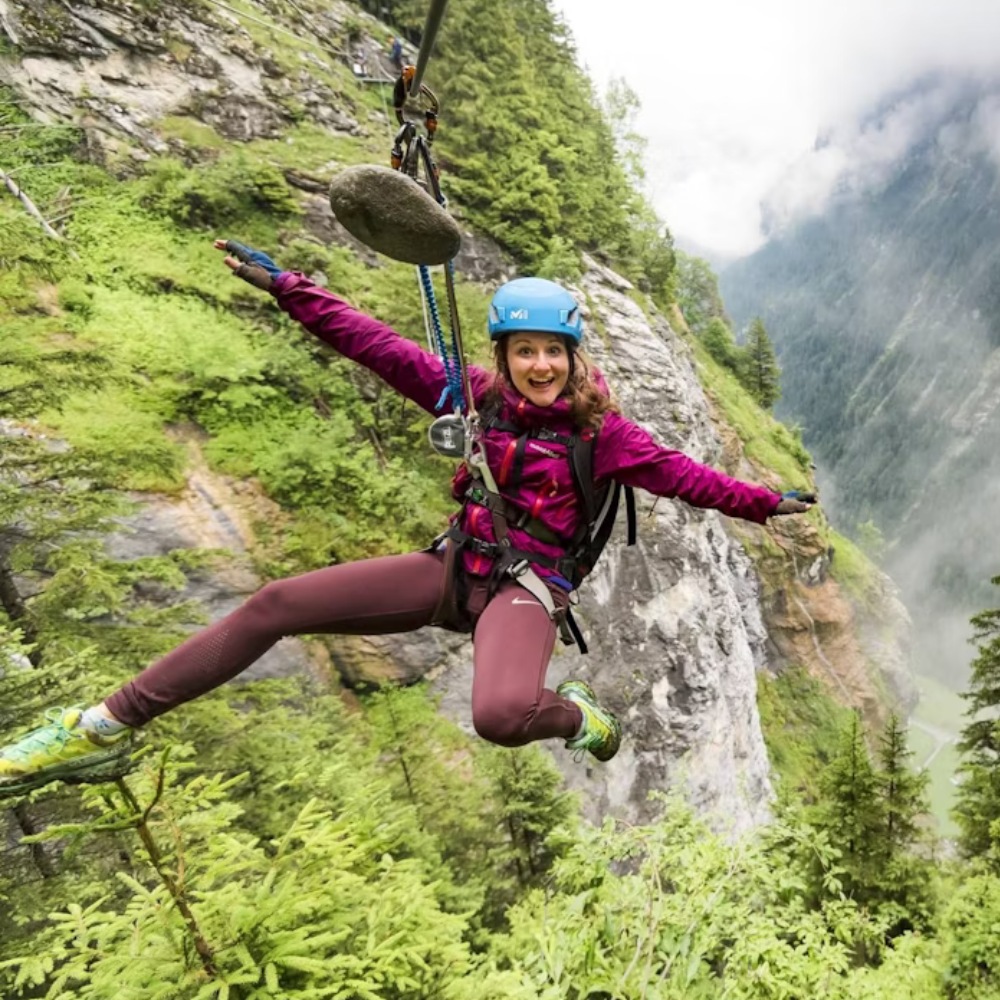
2. Kandersteg – Allmenalp Via Ferrata
- Location: Bernese Oberland
- Highlights: Four waterfalls, vertical ladders, hanging bridge, and the roaring Allmibach falls.
- Difficulty: Challenging
- Best For: Experienced climbers
- Duration: Around 4–5 hours, depending on fitness and breaks.
- Access: Easily reached from Meiringen by cable car to Engstligenalp or nearby mountain stations.
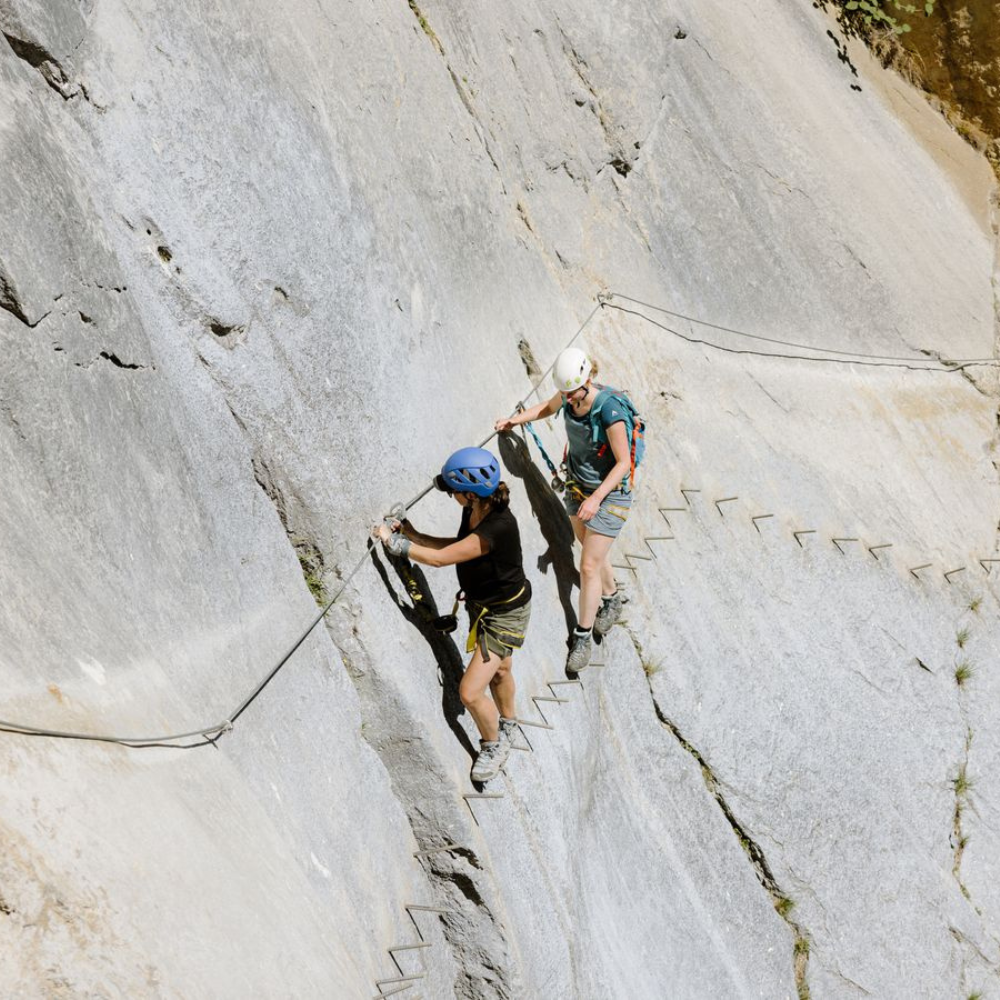
3. Engelberg – Fürenalp Via Ferrata
- Location: Central Switzerland
- Highlights: One of the longest via ferratas in the country (600m vertical), with a dramatic overhang section.
- Difficulty: Very difficult
- Best For: Advanced climbers
- Duration: 6–7 hours, a full-day adventure requiring stamina and technical skill.
- Season: Best from July to September, when conditions are stable and snow-free.
- Access: Reachable from Engelberg by cable car, making it convenient despite its extreme challenge.
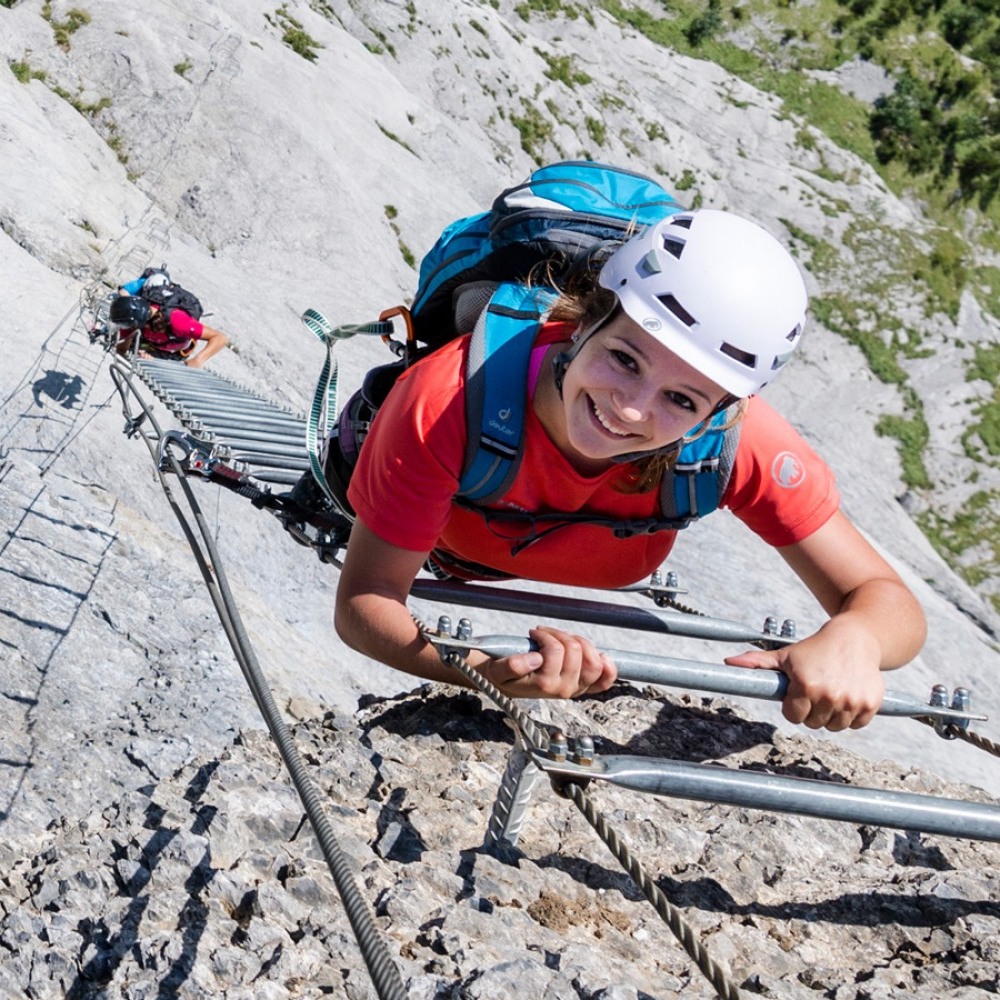
4. Tälli Via Ferrata
- Location: Gadmen, near Susten Pass
- Highlights: 600m of climbing, breathtaking alpine ridge views.
- Difficulty: Moderate to difficult
- Best For: Fit beginners to intermediates
- Duration: Around 4–5 hours, depending on pace and breaks.
- Season: June to October, when the Susten Pass is open and snow-free.
- Access: Easily reached by car or bus from Meiringen, with parking available near the start point.
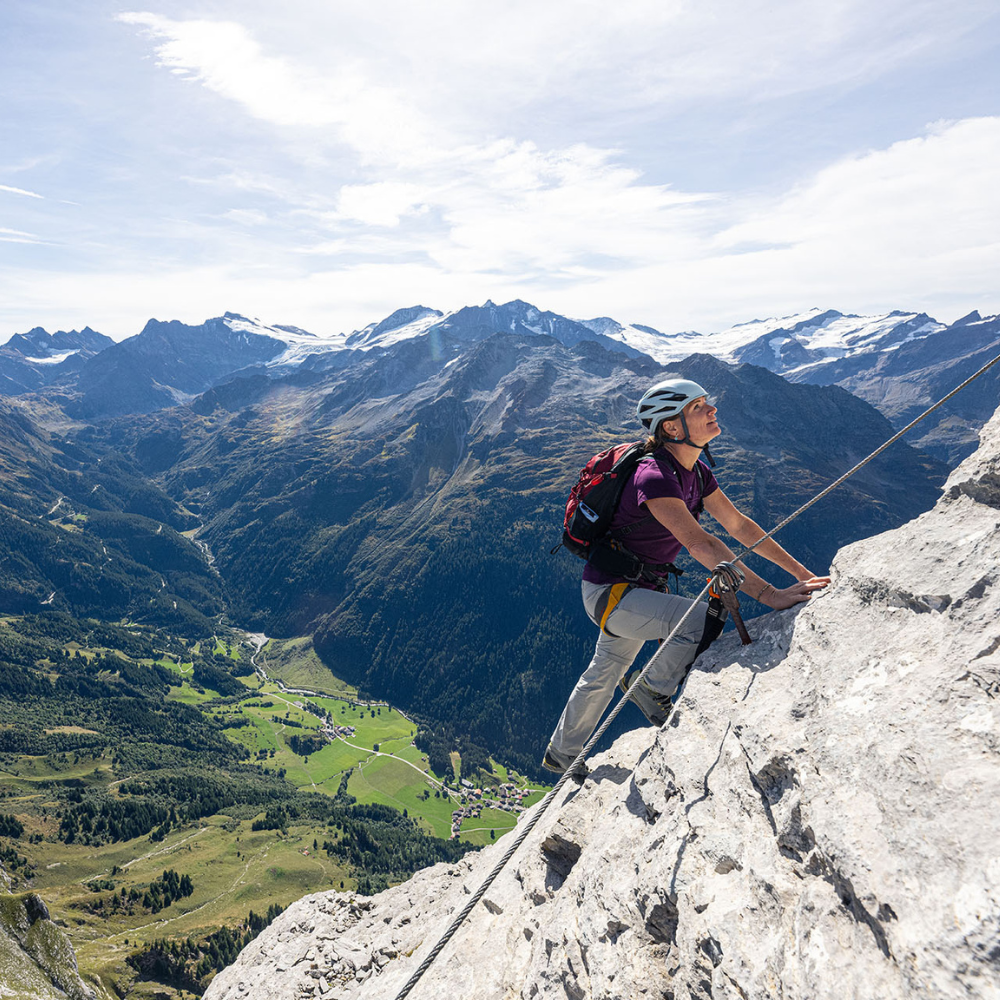
5. Via Ferrata Leukerbad – Daubenhorn
- Location: Valais (Wallis)
- Highlights: Known as the longest via ferrata in Switzerland (1,000m ascent). Panoramic view of Rhone Valley.
- Difficulty: Extreme
- Best For: Experienced mountaineers
- Duration: 7–8 hours of intense climbing, requiring excellent fitness and endurance.
- Season: July to September, as snow and ice make the route dangerous outside these months.
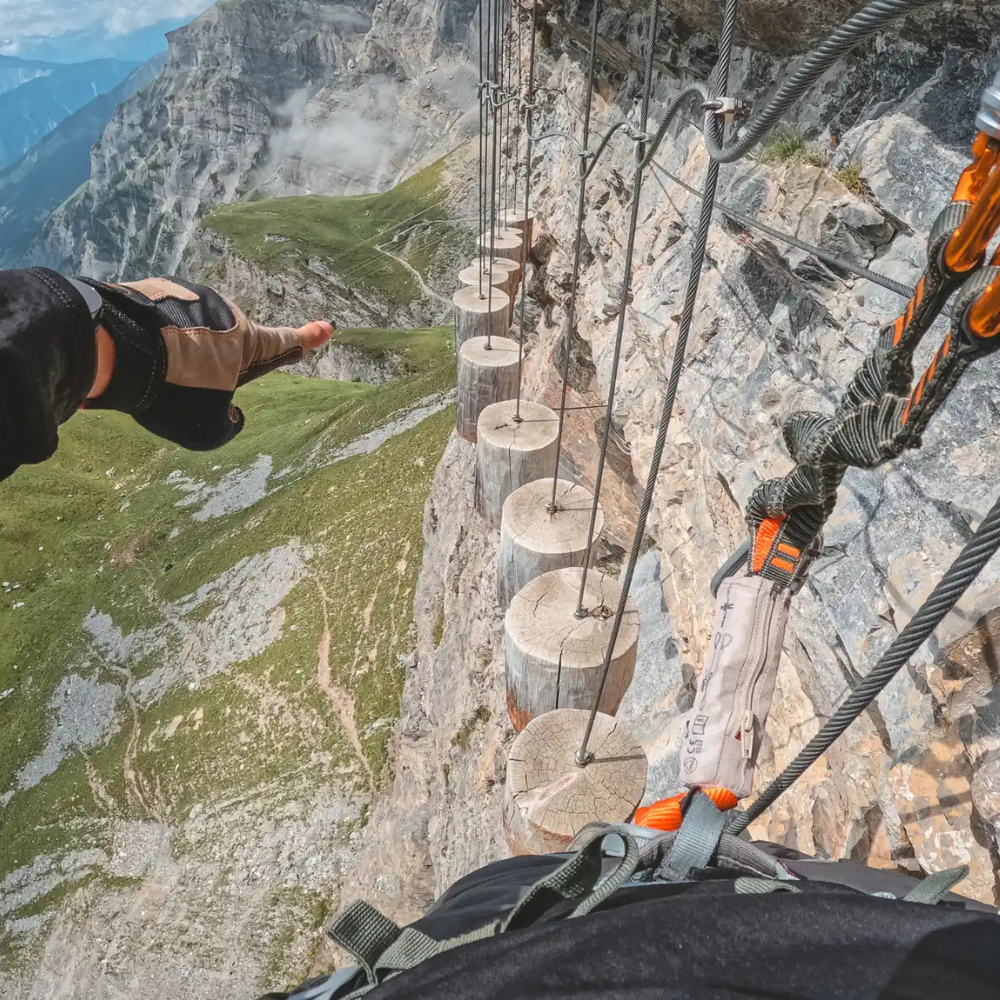
6. Pinut Via Ferrata – Flims
- Location: Graubünden
- Highlights: Switzerland’s oldest via ferrata, dating back to 1739. Mix of ladders, rock tunnels, and views over Flims.
- Difficulty: Easy to moderate
- Best For: Families and history lovers
- Duration: 2–3 hours, perfect for a half-day adventure.
- Season: Late May to October, when conditions are safe and family-friendly.
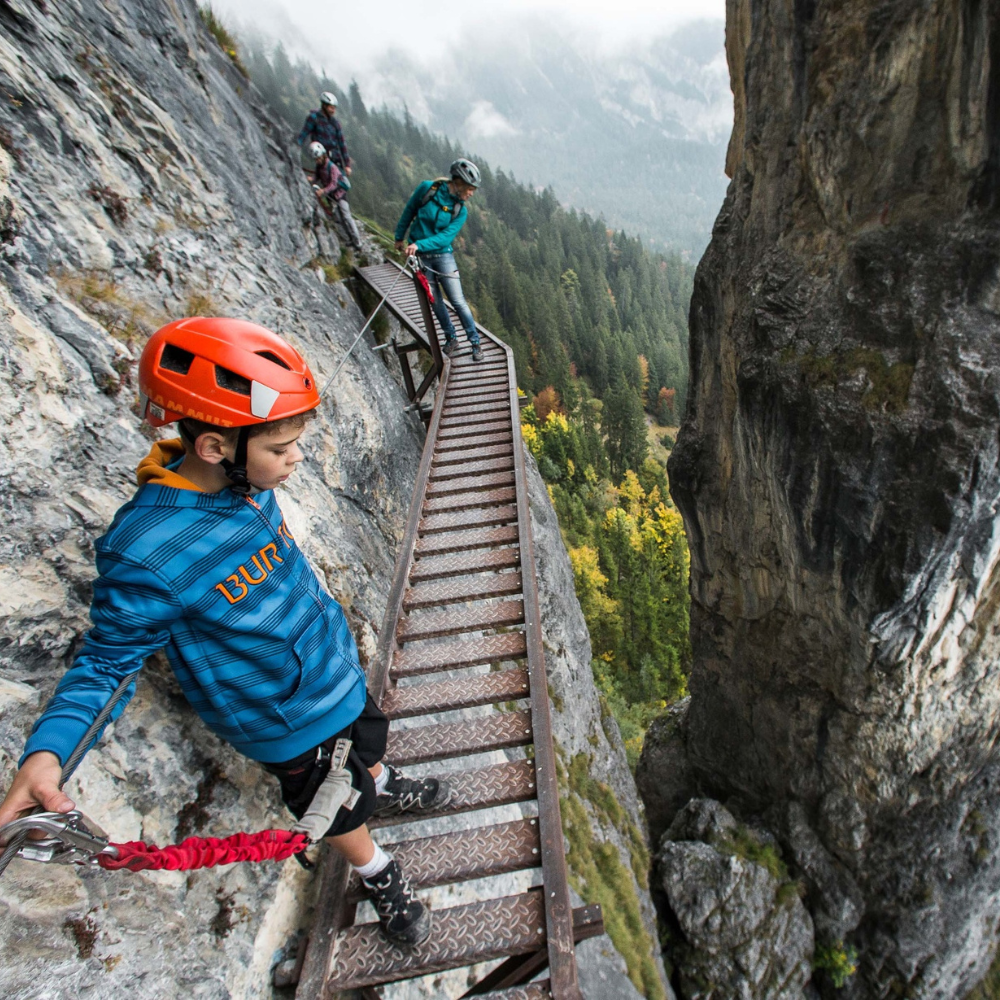
Comparison Table of Popular Via Ferrata Routes in Switzerland
| Via Ferrata Route | Location | Difficulty | Highlights | Best For |
|---|---|---|---|---|
| Mürren-Gimmelwald | Bernese Oberland | Moderate | Suspension bridge, Jungfrau views | Adventurers, photographers |
| Allmenalp (Kandersteg) | Bernese Oberland | Hard | Waterfalls, ladders, hanging bridge | Experienced climbers |
| Fürenalp (Engelberg) | Central Switzerland | Very Hard | 600m vertical climb | Experts only |
| Tälli (Gadmen) | Susten Pass | Medium-Hard | Alpine ridge views | Fit beginners, intermediates |
| Daubenhorn (Leukerbad) | Valais | Extreme | Longest via ferrata, 1000m | Advanced mountaineers |
| Pinut (Flims) | Graubünden | Easy-Moderate | Oldest route, tunnels | Families, beginners |
Best Time to Do Via Ferrata in Switzerland:
- Summer (June–September): The most popular time for climbing, with the best weather, snow-free routes, and long daylight hours. If you’re curious about the Switzerland climate in September, it’s generally mild in the valleys but crisp and fresh in the high Alps ideal for via ferrata tours.
- Autumn (September–October): Cooler days, fewer crowds, and golden alpine landscapes make this a photographer’s dream season.
- Spring: Routes are often limited due to lingering snow and unstable conditions.
- Winter: A few via ferrata remain open, but only for experts with special gear and mountain experience.
Essential Gear for Via Ferrata:
Safety is key. You’ll need:
- Via ferrata set (harness, helmet, lanyards with energy absorber, carabiners)
- Sturdy hiking boots with grip
- Gloves for cable handling
- Weather-appropriate clothing
- Optional: Headlamp, GoPro, snack pack
Safety Tips:
- Always clip both carabiners to the cable.
- Go with a guide if you’re a beginner.
- Check the Swiss Alpine Club (SAC) route conditions.
- Respect weather forecasts thunderstorms are dangerous.
- Carry a Swiss train timetable or local transport app if relying on public transport to reach routes.
Who Can Try Via Ferrata in Switzerland?
- Families: Choose easy routes like Pinut in Flims.
- Beginners: Mürren-Gimmelwald is perfect for first-timers.
- Intermediate climbers: Tälli or Allmenalp.
- Experts: Daubenhorn and Fürenalp for extreme thrills.
Extra Tips to Enhance Your Adventure:
- Combine a via ferrata with Swiss mountain railways (like Jungfraubahn or Gornergratbahn) for a full alpine day.
- Pair the activity with a stay in a mountain hut for a real alpine vibe.
- Look for sunrise or moonlight via ferrata tours in tourist hubs like Interlaken.
- Add nearby attractions to your itinerary: Lake Geneva, Zermatt, Lucerne.
Conclusion:
If you want a mix of adrenaline, alpine beauty, and cultural depth, then via ferrata Switzerland should be at the top of your adventure list. With routes for beginners, families, and extreme climbers, Switzerland is the perfect destination to try this unique experience.
Frequently Asked Questions:
1. Do you need climbing experience?
Not always. Many via ferrata are beginner-friendly.
2. Is via ferrata safe in Switzerland?
Yes, with proper gear and caution. Routes are well-maintained by Swiss Alpine clubs.
3. Can children do via ferrata?
Yes, older kids (8+) can join easy routes with proper equipment.
4. How much does it cost?
Free access, but gear rental (~CHF 30–50/day) and cable car tickets may apply.
5. What is the longest via ferrata in Switzerland?
Daubenhorn in Leukerbad (1,000m ascent).